
TL;DR
Public relations market research goes beyond media monitoring. It includes audience research, narrative analysis, journalist discovery, message testing, and outcome measurement. The best tool depends on the job: MixBright for research-backed personas and strategy decks, Muck Rack for journalist outreach, Meltwater or Brandwatch for enterprise monitoring, and SparkToro for audience channel discovery. Most PR teams overbuy monitoring tools before they have a clear audience model. Start with audience truth, then add outreach and monitoring as needs scale.
PR Needs Better Research, Not Just More Monitoring
PR has become more data-heavy, more AI-assisted, and more accountable. Meltwater’s 2026 State of PR report, based on a survey of more than 1,100 global communications professionals, found that PR teams are being asked to do more and prove more with less. Over 40% of PR teams still measure activity instead of outcomes, even as pressure mounts to link communications to business KPIs source.
That gap between activity tracking and strategic impact is where public relations market research matters most. PRSA’s accreditation framework puts Research first in the RPIE model (Research, Planning, Implementation, Evaluation), arguing that teams should not rush into tactics before researching the situation, defining the business problem, determining key publics, and setting measurable objectives source.
Yet most “PR tools” articles skip straight to media databases and monitoring dashboards. The assumption is that every PR team already knows who they’re trying to reach and what story will move those people. That assumption is usually wrong.
This guide compares 12 tools across the full spectrum of PR market research: audience intelligence, social listening, journalist discovery, survey platforms, and measurement. Each tool is evaluated by best use case, pricing transparency, features, real user sentiment, and honest tradeoffs.
What Is Public Relations Market Research?
Public relations market research is the process of gathering and analyzing audience, media, cultural, competitive, and stakeholder data to plan, execute, and measure PR strategy. PRSA defines public relations as a strategic communication process that builds mutually beneficial relationships between organizations and their publics, including the anticipation, analysis, and interpretation of public opinion, attitudes, and issues source.
That definition is broader than most PR tool categories suggest. In practice, PR market research spans:
- Audience and stakeholder understanding. Who are the publics? What do they believe, fear, and value? Understanding psychographic segmentation and behavioral patterns matters as much as demographic data.
- Narrative and conversation intelligence. What are people already saying about your brand, category, or issue? What cultural signals or complaints are shaping perception?
- Media landscape analysis. Which journalists, outlets, podcasts, newsletters, and creators influence the conversation?
- Message testing. Will the story actually land, or is the team guessing?
- Competitive positioning. What share of voice does the brand own? Where are the gaps?
- Outcome measurement. Did the campaign change awareness, sentiment, trust, or behavior?
The Barcelona Principles, widely adopted in the PR industry, reject Advertising Value Equivalents and emphasize outcomes like shifts in awareness, comprehension, attitude, and behavior source.
The difference between PR research and general market research comes down to focus. Market research typically centers on customers, demand, product fit, and buying behavior. PR research focuses on publics, perception, reputation, media narratives, and communications outcomes. The two overlap heavily when PR supports brand positioning, product launches, or go-to-market strategy.
How to Choose a PR Market Research Tool
Gartner defines the PR and media monitoring tools category as collecting, measuring, analyzing, and interpreting media coverage, online conversations, and associations among people, topics, and ideas from digital sources source. That is useful but incomplete. Media monitoring is just one of five research jobs a PR team actually needs to do.
The 5 PR Market Research Jobs
1. Audience clarity. Who are the publics and stakeholders? What do they care about? What messages and motivations matter? Tools that help: MixBright, SparkToro, Audiense, SurveyMonkey, Qualtrics.
2. Narrative and conversation intelligence. What are people saying? What is emerging? What complaints or cultural signals matter? Tools that help: Brandwatch, Talkwalker, Meltwater, Brand24, Reddit and manual community research.
3. Media landscape and journalist research. Which journalists, outlets, newsletters, podcasts, and creators influence the topic? Tools that help: Muck Rack, CisionOne, Prowly, SparkToro.
4. Campaign measurement. Did PR change awareness, sentiment, share of voice, behavior, traffic, or reputation? Tools that help: Meltwater, CisionOne, Brandwatch, Talkwalker, Muck Rack, Prowly.
5. Stakeholder-ready deliverables. Can the team turn research into an artifact that executives or clients understand? Tools that help: MixBright for presentation-ready personas and decks, monitoring platforms for dashboards, Prowly and Muck Rack for PR reports.
The common mistake is buying Layer 3 or 4 tools (journalist databases, monitoring platforms) before Layer 1 is clear. A bigger media database will not fix a weak audience model. A better monitoring dashboard will not fix unclear messaging.
At-a-Glance Comparison Table
| Tool | Best For | Pricing Snapshot | G2/Capterra Rating | Key Strength | Biggest Limitation |
|---|---|---|---|---|---|
| MixBright | Persona-led PR strategy and audience intelligence | Demo/custom | Limited public reviews (Beta) | Fast brand insights, confidence labels, slide exports | Early-stage; limited public social proof |
| SparkToro | Audience affinity and channel discovery | Free; $50/mo; $150/mo | N/A | Fast “where audience hangs out” research | Not enough for pain-point validation |
| Audiense | Social audience segmentation | From $948/year | G2: 4.5/5 (247 reviews) | Segmentation and persona inputs | Can feel fragmented and X-heavy |
| Muck Rack | Journalist research and outreach | Custom ($10K-$15K+ estimated) | G2: 4.5/5 (406 reviews) | Media database and pitching workflow | Monitoring may need manual work |
| Meltwater | Enterprise monitoring and intelligence | Custom ($6K+/year estimated) | G2: 4.1/5 (2,516 reviews) | Broad monitoring, alerts, reporting | Cost and learning curve |
| CisionOne | Enterprise PR ecosystem | Custom ($10K+/year estimated) | G2: 3.9/5 (1,316 reviews) | Database, monitoring, distribution | Mixed UX and contact quality sentiment |
| Prowly | Affordable PR outreach and CRM | From $258/year (2 users) | G2: 4.2/5 (112 reviews) | Value and ease for SMBs | Not ideal for complex enterprise PR |
| Brandwatch | Enterprise social intelligence | Custom quote | G2: 4.4/5 (721 reviews) | Large-scale social listening | Learning curve, price, data gaps |
| Talkwalker | Deep listening and LLM visibility | Custom (Core/Analyze/Business) | G2 reviews available | AI summaries, LLM insights | Complex setup, data limits by plan |
| Brand24 | Affordable brand monitoring | $199/$299/$399/mo | G2: 4.6/5 (339 reviews) | Brand mentions and alerts | Noise, filtering issues |
| SurveyMonkey | Quick surveys and message testing | From ~$25/mo | Capterra: 4.6 (10,387 reviews) | Fast survey collection | Feature gating, panel quality |
| Qualtrics | Enterprise market research | Custom/enterprise | G2: 4.4/5 (3,004 reviews) | Advanced survey lifecycle | Expensive, complex, steep curve |
The 12 Best Public Relations Market Research Tools
1. MixBright

Best for: Research-backed personas and PR strategy decks
MixBright is the strongest starting point when the PR problem is not “find more journalists” but “define the audience and story.” It turns a URL or brief into brand insights, a 360-degree audience overview, and data-driven personas in minutes, with confidence labels that distinguish First-Party, Data-Backed, and AI-Inferred insights.
Pricing: Demo available via booking. Public self-serve pricing is not published. The product is currently in Beta. See MixBright pricing options.
Key features:
- Guided workflow from brand inputs to personas (brand insight, audience insight, persona generation)
- Brand Insights step that turns a URL or brief into a single source of truth on features, benefits, and positioning
- Audience Insights step that adds market research and behavioral trends
- Persona Generator for buyer, user, and marketing persona types
- Confidence labels on each insight (First-Party, Data-Backed, AI-Inferred)
- Presentation-ready exports to Google Slides, PPT, and PDF
- Photorealistic royalty-free persona images
- Documented methodology and data integrity page
- In-app editing and customization
- Encryption at rest, enterprise-grade hosting, GDPR/CCPA/PIPEDA alignment
Tradeoffs:
- No public pricing or free trial yet (Beta stage)
- Limited public third-party reviews, so buyers should evaluate via demo and methodology transparency
- Not a full media monitoring or journalist database platform
- Best paired with outreach tools (Muck Rack, Prowly) and monitoring tools (Brand24, Meltwater) for execution
Why it belongs at the top of a PR research stack: Most PR tool lists focus on what happens after the strategy is set. MixBright addresses the upstream questions: Who are we talking to? What do they care about? What story should we tell? How confident are we in each insight? That confidence-labeling approach is uncommon in the category and addresses a growing concern about AI hallucinations in research outputs.
For agencies and consultants who need to defend their strategy in a pitch or executive review, the slide export workflow eliminates the gap between “research done” and “deck ready.” If you need audience clarity before choosing media targets, explore MixBright.
2. SparkToro
Best for: Finding where an audience spends attention
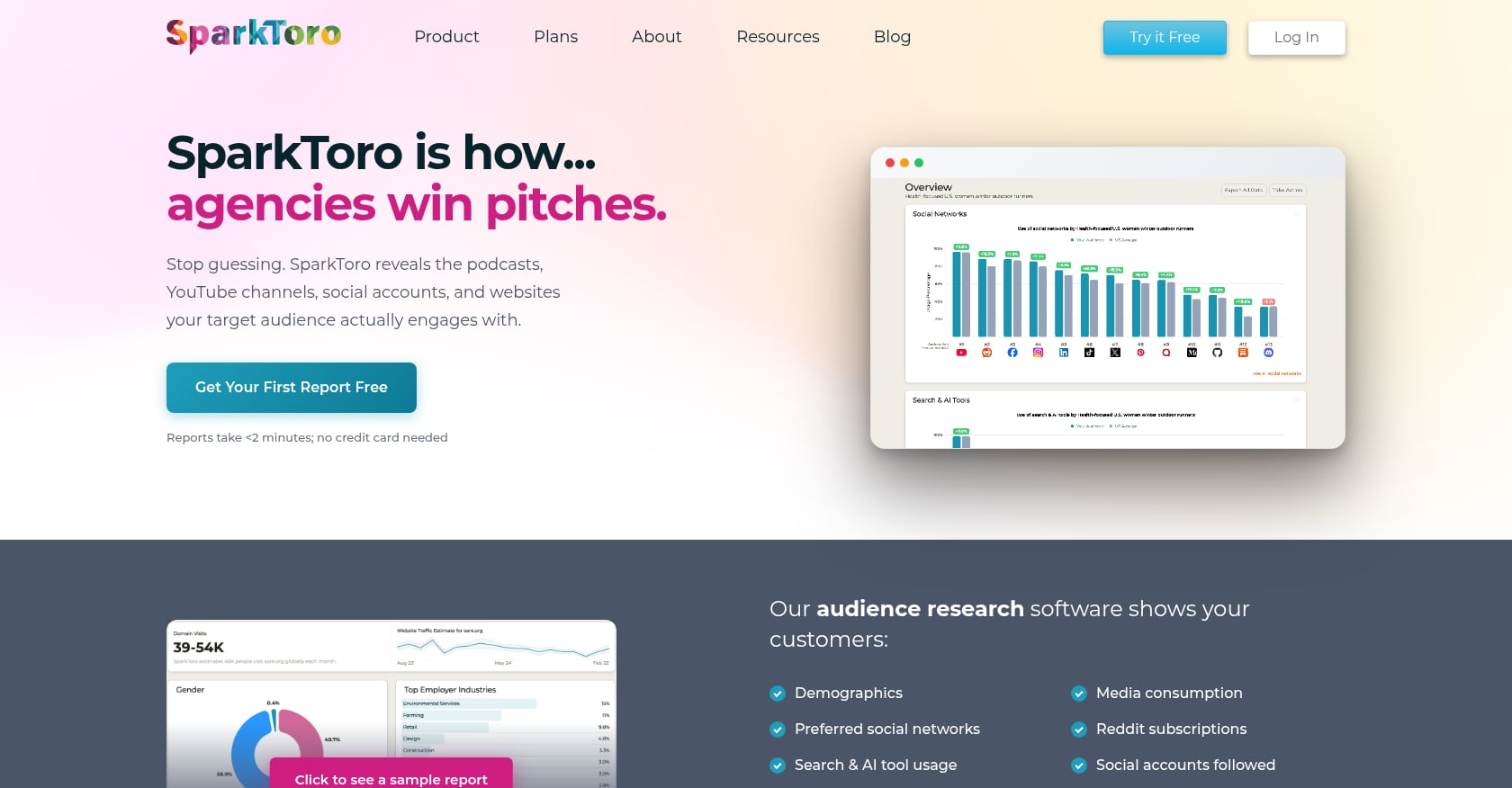
SparkToro answers the question “where does my audience already hang out?” by analyzing websites, social accounts, podcasts, YouTube channels, Reddit communities, search terms, and demographic signals.
Pricing: Free plan ($0/month, 5 reports/month), Personal ($50/month), Business ($150/month). Plan differences affect the number of websites, social networks, search keywords, podcasts, YouTube channels, Reddit communities, and contact data available source.
Key features:
- Audience reports based on websites, social accounts, search keywords, podcasts, YouTube channels, Reddit, press accounts, and AI prompt topics
- Demographic signals including gender/age, bio words, employment, skills, education, and geography
- Useful for media planning, podcast discovery, influencer discovery, and PR channel planning
Tradeoffs:
- Strong for attention and affinity data, weak for pain-point validation or “what will people pay for?”
- One Reddit user in r/DigitalMarketing said SparkToro showed who an audience followed but not what the audience wanted. They found manual Reddit and Quora complaint mining more useful for product validation, while still calling SparkToro “great for PR outreach and influencer discovery” source.
- Should be paired with qualitative community research or interview data to validate messaging
Bottom line: Use SparkToro when you need to know where your audience already pays attention. Do not rely on it as your only source for messaging direction or pain-point validation.
3. Audiense
Best for: Social audience segmentation and persona inputs
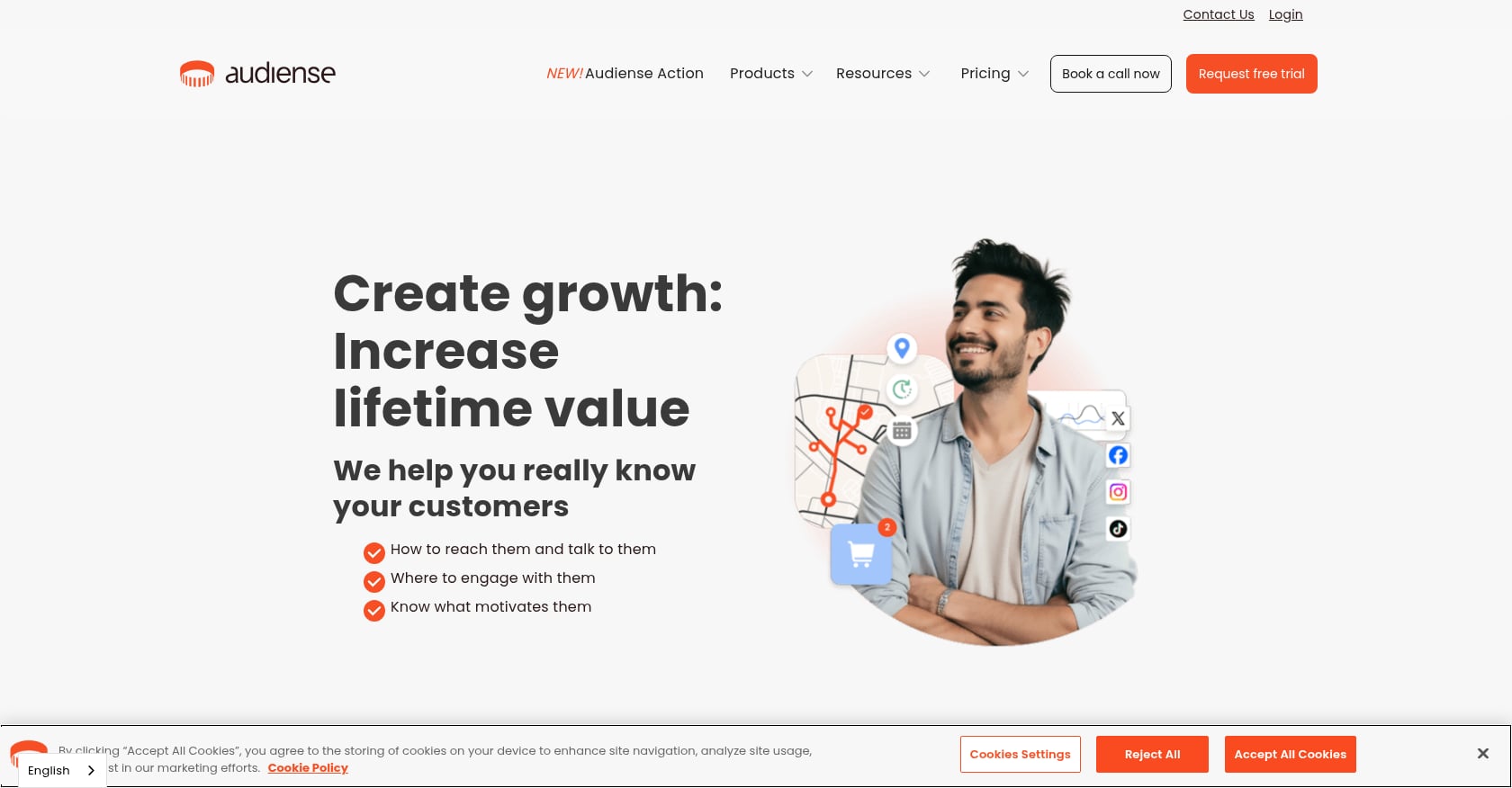
Audiense provides social audience segmentation that can feed persona development, sponsorship research, content ideation, and targeted advertising strategy.
Pricing: G2 lists Twitter Marketing from $948/year, Audiense Insights from $8,352/year, and Audiense Insights Unlimited from $25,000/year source.
Key features:
- Audience insights, influencer identification, buyer personas, network analysis, dashboards, and visualizations
- Data foundation for persona development, audience pocket discovery, partnerships, and content ideation
- Behavioral segmentation inputs useful for PR campaign targeting
Tradeoffs:
- Data can feel fragmented and heavily weighted toward X (formerly Twitter)
- One G2 reviewer praised quick access to audience insights but criticized the challenge of pulling together audience profiles across different data sources source
- Requires interpretation skill to synthesize social audience clusters into actionable PR strategy
- May not be the fastest route to a polished persona deck
Bottom line: Use Audiense when segmentation depth matters and your team can interpret social audience clusters. For teams that want a faster path from segmentation to stakeholder-ready personas, pairing Audiense data with a persona generation tool like MixBright can close the gap.
4. Muck Rack

Best for: Journalist research and media relations workflows
Muck Rack is widely regarded as one of the strongest tools for journalist discovery, verified media contacts, media list building, pitching workflows, alerts, coverage tracking, and PR reporting.
Pricing: Journalist tools are free, but the full PR platform requires a paid subscription with custom pricing. Add-ons can include broadcast monitoring, social listening, and press release distribution source. Third-party estimates often place the Standard range at $10,000 to $15,000 annually source.
Key features:
- AI communications platform combining global media monitoring, trusted media data, AI automation, and analyst-led media intelligence
- Media list building, outreach, monitoring, and reporting in one workflow
- G2 rating: 4.5/5 from 406 reviews source
Tradeoffs:
- Monitoring and reporting may not be as deep as enterprise monitoring-first platforms
- A G2 reviewer praised alerts, reporting automation, and accurate reporter information but criticized Excel list exports and podcast/Substack coverage gaps source
- Practitioners on Reddit describe Muck Rack as strong for media relations workflow, but note that reporting and media monitoring can require manual sifting source
- Pricing is custom and negotiable. One Reddit user in a 2026 thread described renewal pricing increasing significantly before negotiation source
Bottom line: Use Muck Rack when journalist accuracy and media relations workflow matter more than broad social intelligence. It is a Layer 3 (media truth) tool, not a Layer 1 (audience truth) tool.
5. Meltwater
Best for: Enterprise media intelligence and all-in-one monitoring
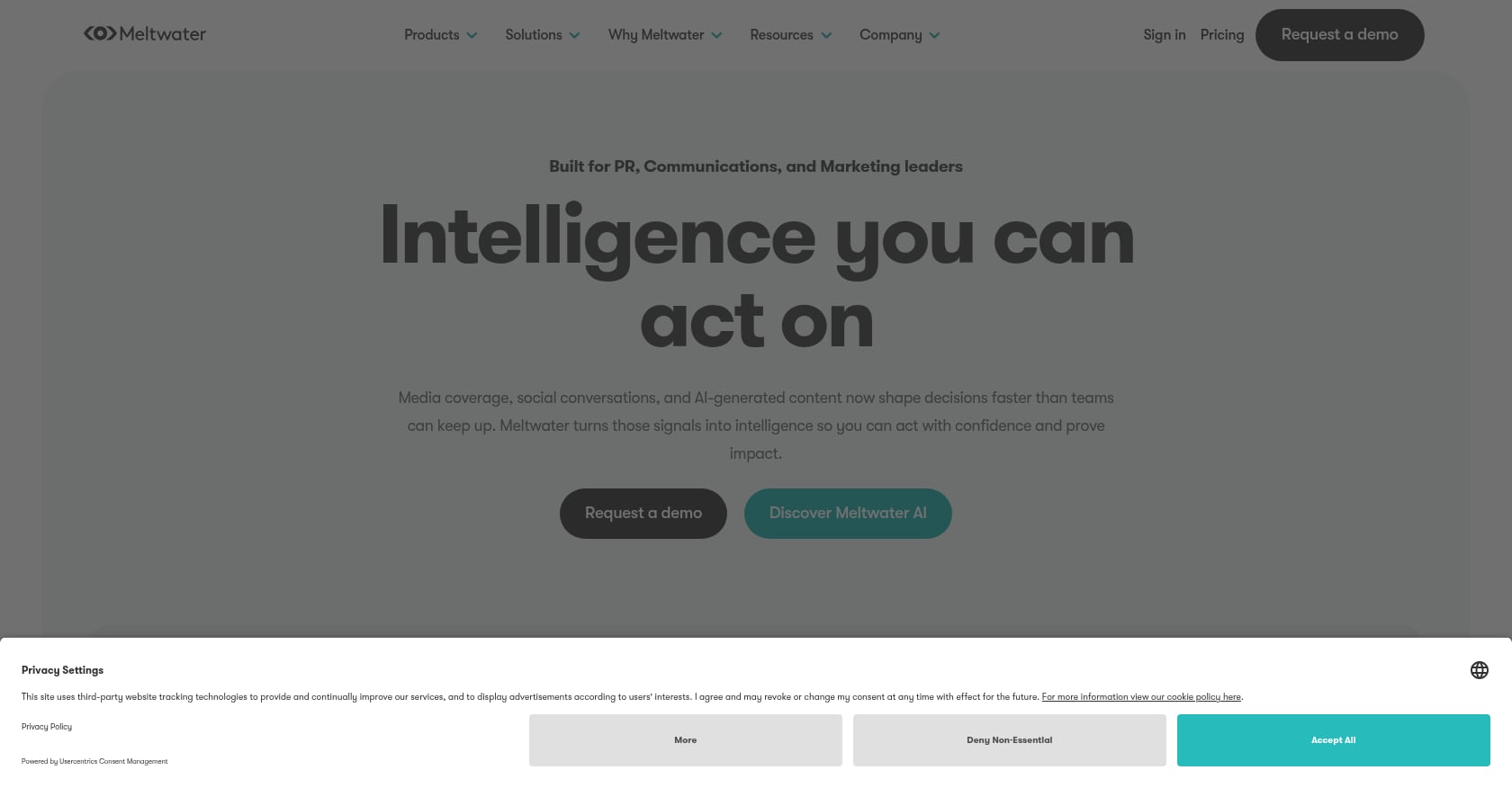
Meltwater is the go-to choice for in-house PR and communications teams that need media monitoring, social listening, alerts, journalist identification, competitive benchmarking, sentiment, and reporting in one system.
Pricing: Sales-led pricing. Prowly estimates Meltwater pricing from $6,000/year based on third-party data and public reviews source. G2 shows a perceived cost rating of $$$$$ with an average return on investment timeline of 14 months.
Key features:
- Monitors 6M+ media sources across news, print, broadcast, podcasts, and social media
- Unlimited search, real-time alerts, journalist identification, competitive benchmarking
- Unified reporting, predictive analytics for mention forecasting, brand-level sentiment
- G2 rating: 4.1/5 from 2,516 reviews source
Tradeoffs:
- Expensive for lean teams
- Requires setup and training to avoid noisy monitoring
- A Reddit commenter described Meltwater as less of a pure media database and more of an all-in-one monitoring and insights platform, saying its value comes from having media monitoring, social listening, sentiment, and reporting working together source
- Pricing is not transparent; expect a sales conversation
Bottom line: Use Meltwater when PR monitoring and reporting are ongoing business processes, not occasional campaign tasks.
6. CisionOne
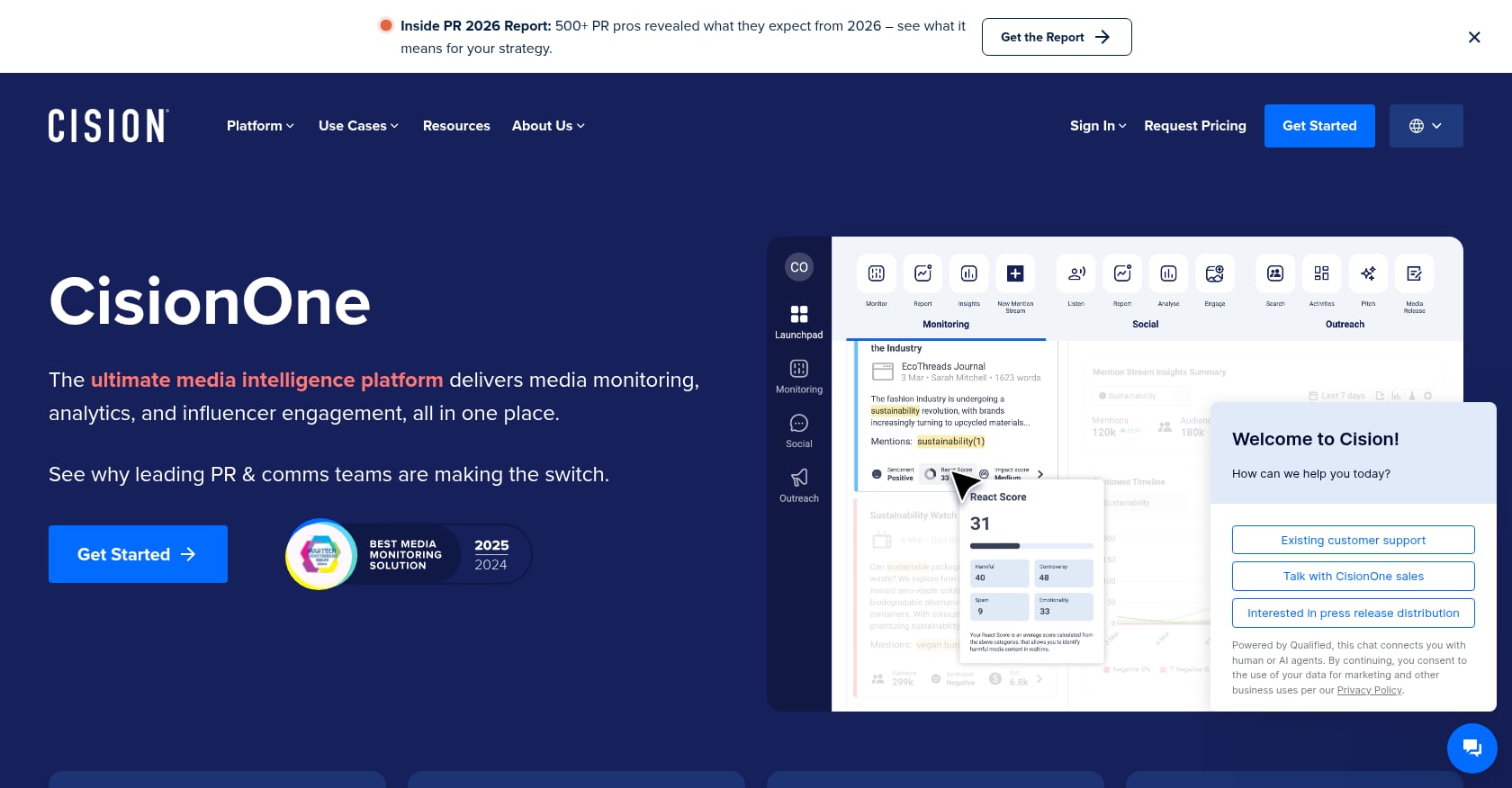
Best for: Large PR teams needing database, monitoring, analytics, and distribution in one ecosystem
CisionOne offers media contacts, monitoring, PR analytics, influencer targeting, social listening, and PR Newswire-related workflows in a connected ecosystem.
Pricing: Custom pricing. Prowly estimates Cision pricing from $10,000/year based on research and third-party sources source.
Key features:
- AI-powered platform for media monitoring and outreach, analytics, media and influencer targeting, social listening, journalist discovery, brand mention tracking, coverage summaries, and campaign analytics
- G2 rating: 3.9/5 from 1,316 reviews source
- Gartner describes CisionOne as helping organizations monitor and analyze media coverage across online news, social media, print, and broadcast source
Tradeoffs:
- Mixed sentiment on usability and data freshness. One r/PublicRelations user who had used Cision, Meltwater, and Muck Rack called Cision difficult for reports and monitoring, saying emails were often out of date or unavailable source
- Enterprise pricing and procurement friction
- Can be more system than a small team needs
- Reddit threads in r/PublicRelations show practitioners do not view Cision, Meltwater, and Muck Rack as interchangeable. One thread summarized the pattern: Cision may be better for monitoring in some contexts, Muck Rack better for pitching, and Meltwater valuable when the database is the priority source
Bottom line: Use CisionOne when you need enterprise breadth and distribution integration. Do not choose it just because it is the legacy name in PR software.
7. Prowly
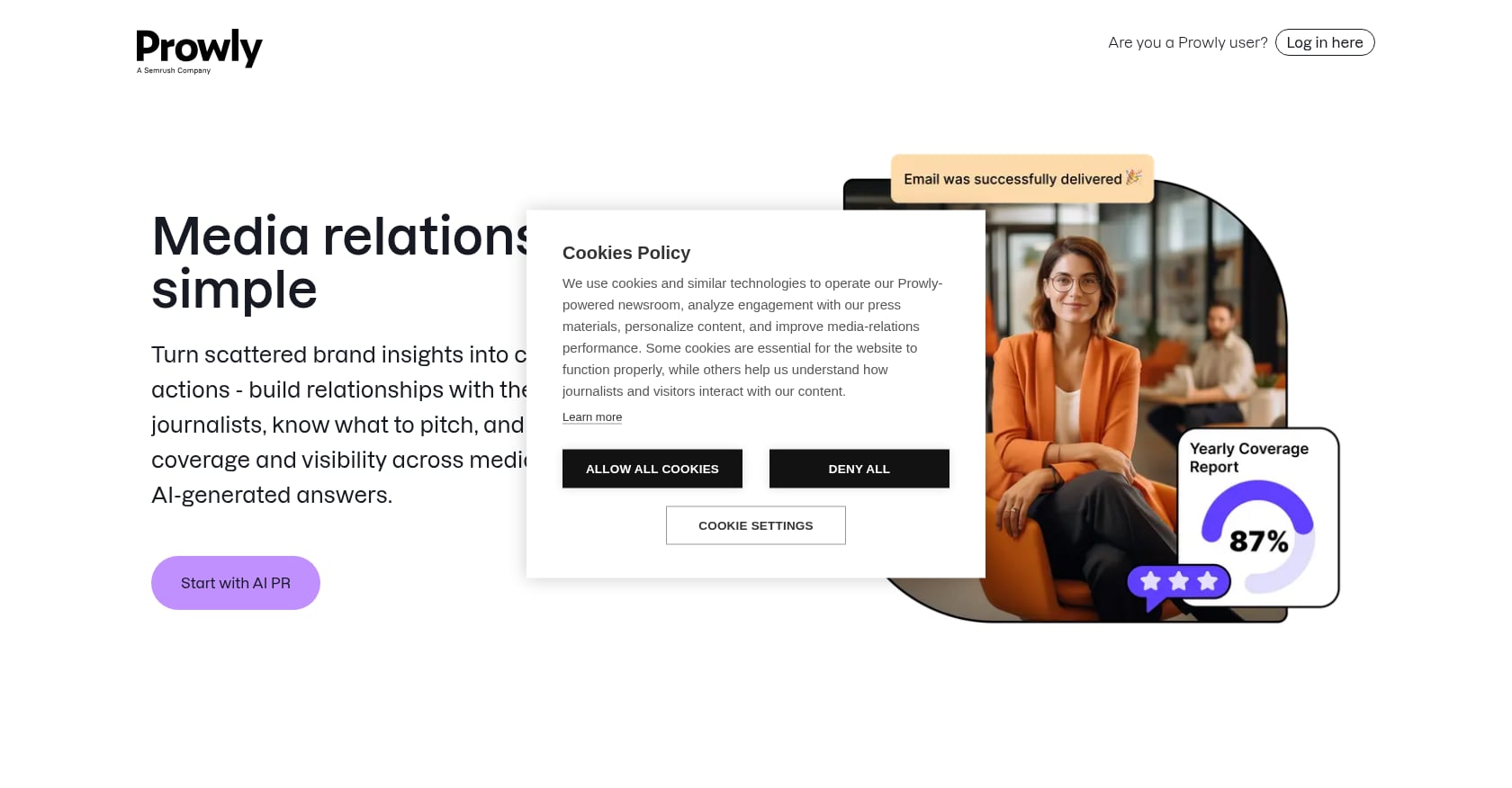
Best for: Budget-conscious PR outreach, newsroom, and reporting
Prowly serves small to midsize PR teams, agencies, and freelancers that need a PR CRM, media database, press release creation, online newsroom, pitch tracking, and reporting without enterprise pricing.
Pricing: G2 lists Basic Annual starting at $258 for 2 users and Basic Monthly starting at $369 for 2 users source. Prowly also offers a trial period and monthly billing, making it accessible for teams evaluating PR research tools on a budget.
Key features:
- Media database, press release creator, distribution and pitching, online newsroom hosting
- AI Assistant, social media monitoring data backed by Semrush, print/broadcast monitoring, reporting
- Prowly’s own comparison page notes it may not be suitable for corporate PR teams, as it focuses mostly on small to medium in-house PR pros, agencies, and freelancers source
- G2 rating: 4.2/5 from 112 reviews source
Tradeoffs:
- Not as deep as Cision, Meltwater, or Brandwatch for enterprise intelligence
- May not fit complex global corporate PR workflows
- A 2026 G2 reviewer said Prowly provides many features for the price, with quick implementation and helpful support source
Bottom line: Use Prowly when you need a practical media relations workflow and cannot justify enterprise PR software.
8. Brandwatch
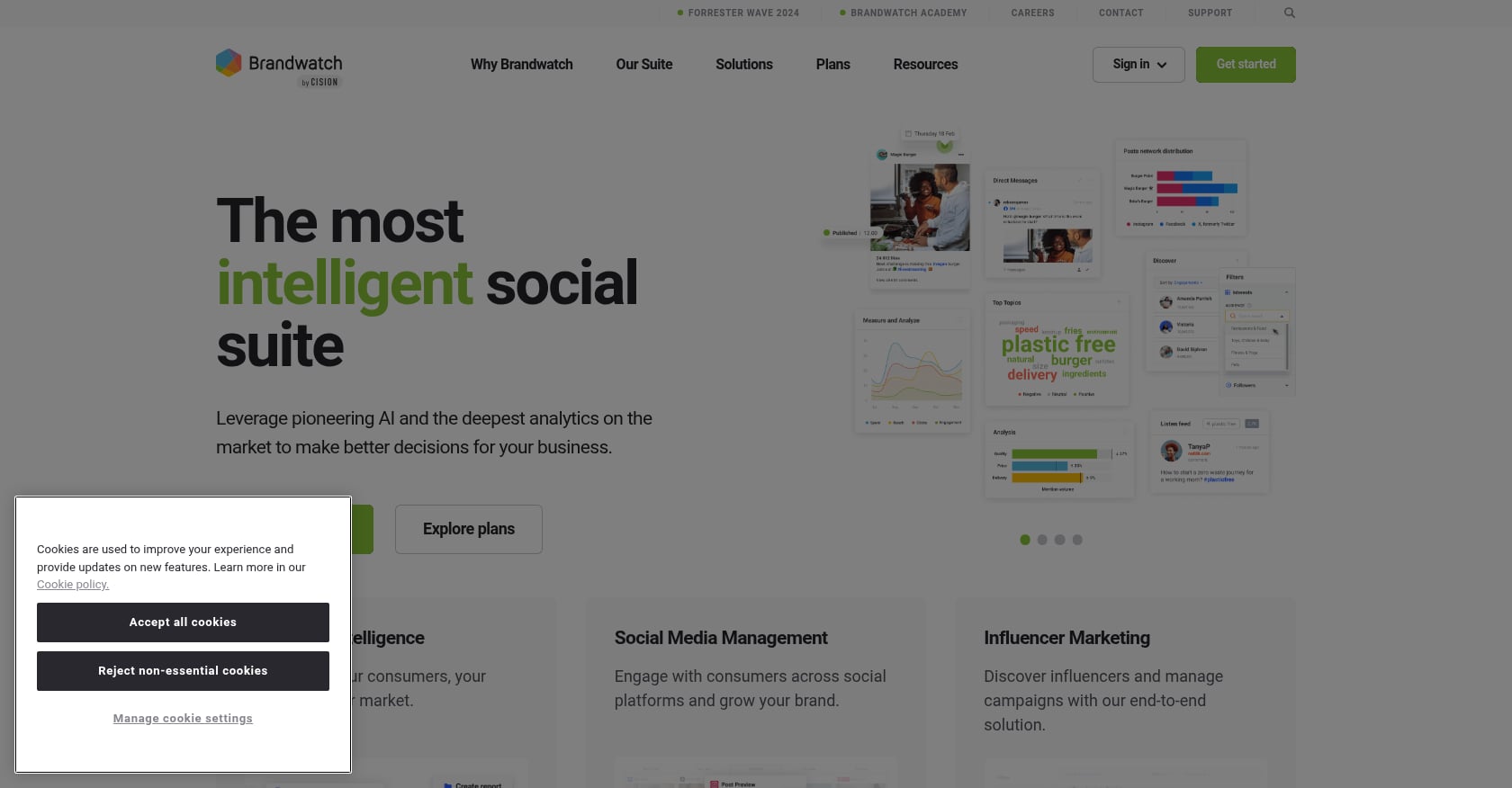
Best for: Enterprise consumer intelligence and social-first PR research
Brandwatch serves global consumer brands, insights teams, and PR/social teams that need large-scale social listening, sentiment analysis, trend detection, competitive intelligence, and executive-ready dashboards.
Pricing: Custom pricing. G2 shows “Request a demo” with an average implementation time of 2 months source.
Key features:
- AI-enriched data from over 100 million social and online sources
- Segmentation, sentiment analysis, flexible dashboards, and stakeholder-friendly visualizations
- G2 rating: 4.4/5 from 721 reviews source
- X’s Brandwatch/Co-op case study shows how social listening can support immediate crisis response (under an hour) and long-term campaign tracking source
Tradeoffs:
- Expensive and complex for small teams
- A G2 reviewer praised powerful social listening but said the learning curve and pricing are challenging for smaller teams, and reports may require manual refinement to reduce irrelevant mentions source
- Another reviewer noted that exports of some data types, such as Reddit, recently became unavailable source
- Requires analyst skill to build effective queries and dashboards
Bottom line: Use Brandwatch when online conversation intelligence is mission-critical and your team can support analyst-led setup.
9. Talkwalker by Hootsuite
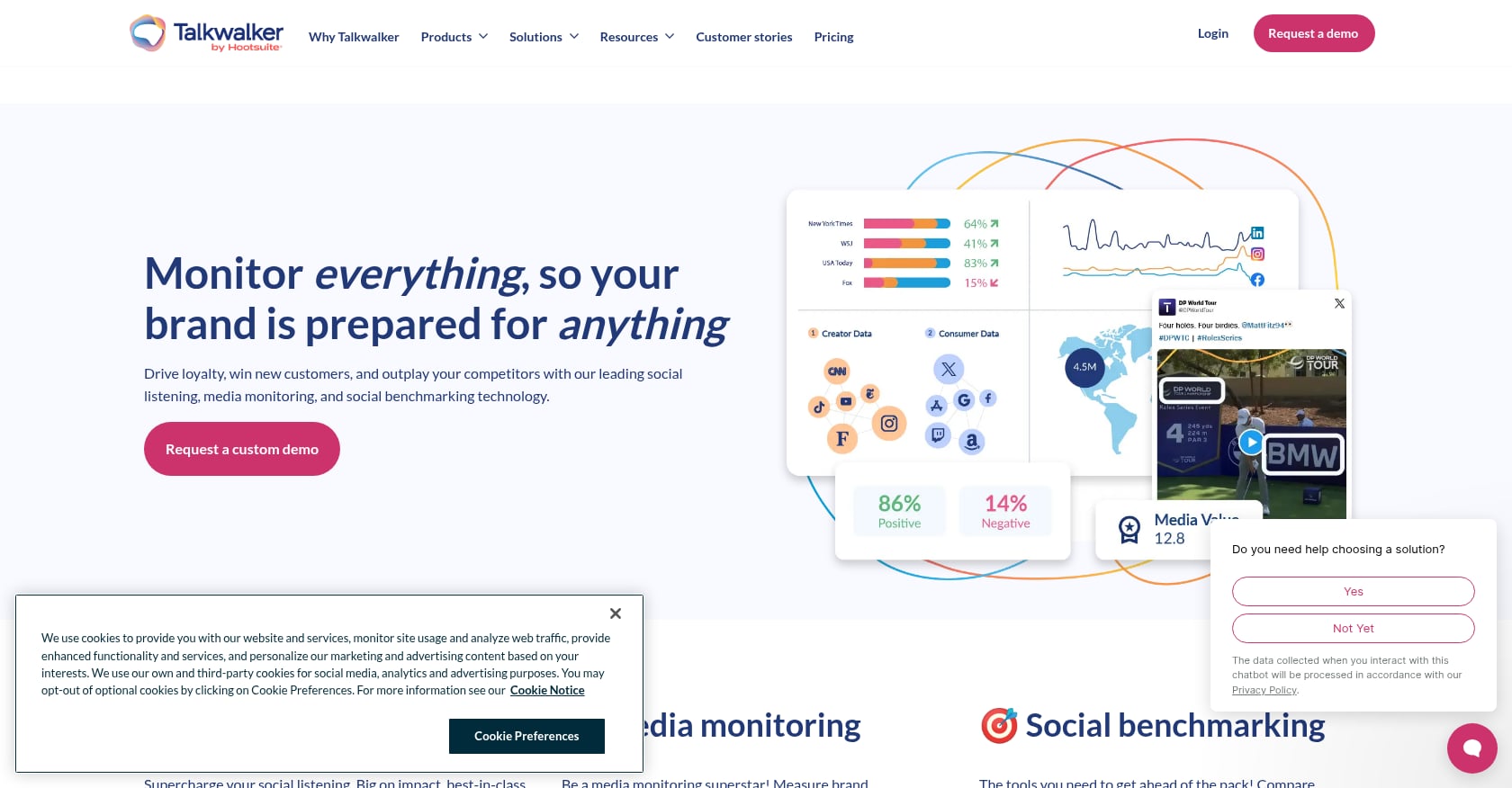
Best for: Deep social listening, AI insights, and emerging LLM visibility
Talkwalker is built for enterprise social, comms, and insights teams that need cross-channel monitoring, AI summaries, forecasting, alerts, and the emerging capability of tracking how AI assistants discuss a brand or industry.
Pricing: Talkwalker lists Core, Analyze, and Business tiers but does not show public prices. Core includes social listening, media monitoring, topic/channel analytics, dashboards, TalkwalkerAI, AI Agent, LLM Insights, and unlimited users. Higher tiers expand result volume, topics, filters, channels, and historical data source.
Key features:
- Social listening and media monitoring across social, news, podcasts, Reddit
- AI Agent for natural language questions about your data
- LLM Insights for tracking how AI assistants like ChatGPT, Perplexity, and Gemini talk about your brand
- Peak detection, forecasting, and AI summaries
Tradeoffs:
- Complex setup and steep learning curve
- A G2 reviewer said Talkwalker provides insights the team could not access before, but the platform is complex and takes time to learn source
- Another reviewer criticized limited historical data in some plans and weak operator support for advanced queries source
- Pricing is not transparent
- Data caps and history limits can matter depending on plan tier
The LLM visibility angle is increasingly relevant. A LinkedIn post from Indicate Media argued that PR now needs to resonate with reporters, editors, and investors while also being discoverable and credible to AI systems like ChatGPT, Perplexity, Gemini, and Grok source. Talkwalker is one of the few platforms building monitoring tools for this emerging surface.
Bottom line: Use Talkwalker when social conversation intelligence is a strategic function, not an occasional lookup.
10. Brand24
Best for: Affordable social listening and brand monitoring
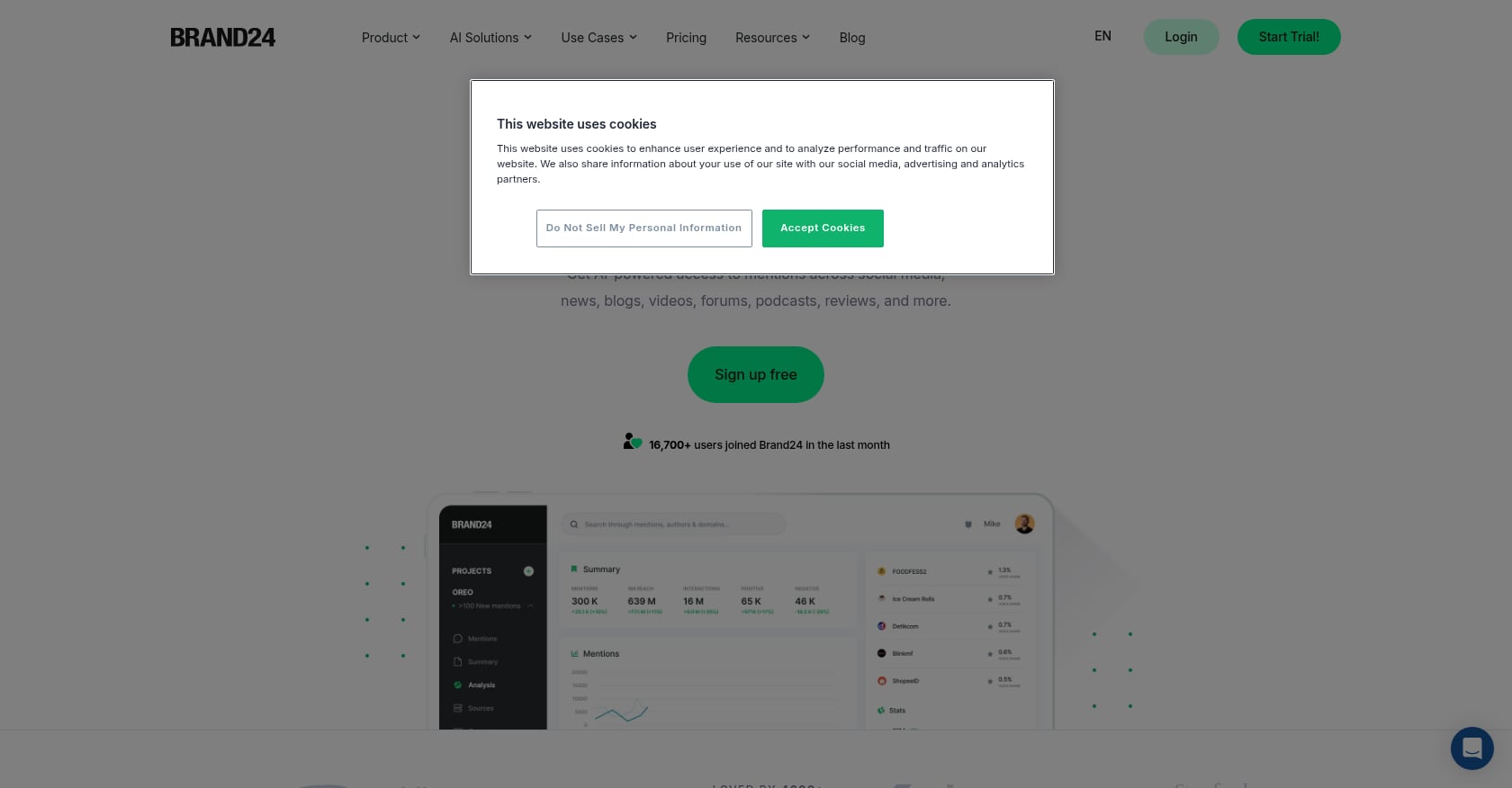
Brand24 serves SMBs, startups, agencies, and mid-market marketers that need brand mention alerts, reputation monitoring, competitor tracking, and sentiment analysis without enterprise pricing.
Pricing: Individual at $199/month (1 user, 2,000 mentions/month, 3 keywords), Team at $299/month (5,000 mentions, 7 keywords), Pro at $399/month (25,000 mentions, 12 keywords), Business at $599/month (100,000 mentions, 25 keywords) source.
Key features:
- AI-powered media monitoring and social listening across the web
- Reputation monitoring, customer insights, influencer outreach, competitor monitoring
- G2 rating: 4.6/5 from 339 reviews source
Tradeoffs:
- Filtering noise requires keyword discipline. A commenter in r/SocialMediaManagers noted that many listening platforms leave teams wading through noise unless they invest in include/exclude keywords, author/domain exclusions, and source prioritization source
- G2 users cite filtering problems, limited features at lower tiers, and occasional data inaccuracy as recurring negatives source
- A Capterra reviewer noted AI summaries had become more quantitative and less substantive than before source
- Not suited to deep enterprise media intelligence
Bottom line: Use Brand24 when you need practical monitoring and alerts before you need a full enterprise PR intelligence platform.
11. SurveyMonkey
Best for: Quick PR surveys and lightweight quantitative research
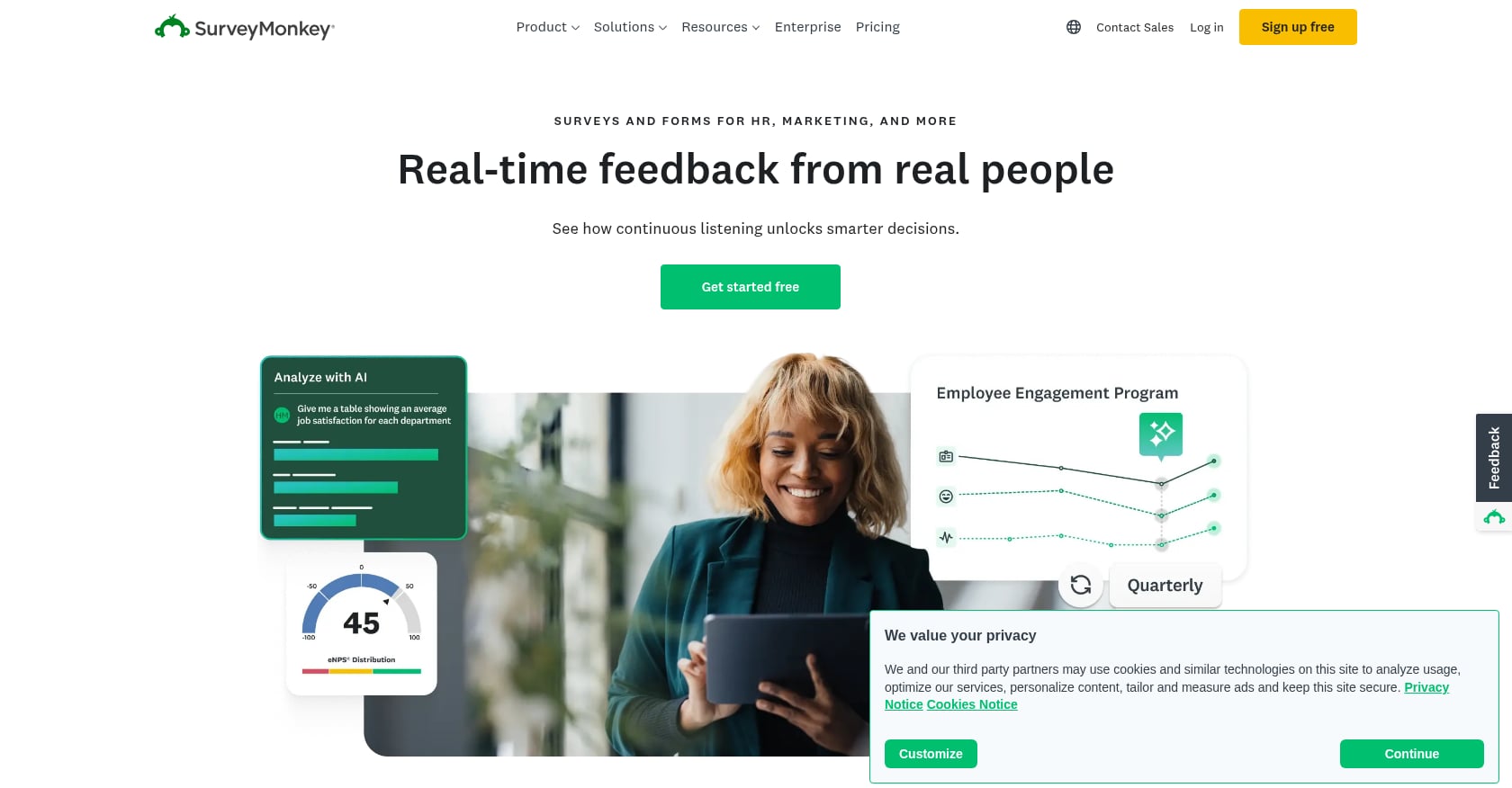
SurveyMonkey handles fast audience polls, stakeholder feedback, event research, message testing, and basic quantitative research for PR and communications teams.
Pricing: Capterra shows “Get Price” rather than a fixed public price. Third-party summaries commonly report paid plans beginning around $25/month source.
Key features:
- Streamlined data collection, analysis, and decision-making for research, events, and business needs
- Intuitive interface, question library, and data analysis tools
- Capterra rating: 4.6 from 10,387 reviews, with 93% positive sentiment source
Tradeoffs:
- Logic, panel quality, and advanced features can be gated behind higher-tier plans
- A Reddit user in r/UXResearch complained about buying responses but not being able to use basic logic without upgrading, encountering rushed panel responses, and dealing with slow email-only support source
- Survey quality still depends entirely on questionnaire design and sampling
- Not a full PR intelligence platform
Bottom line: Use SurveyMonkey for fast quantitative checks and message testing, not as a substitute for strategic audience intelligence.
12. Qualtrics Strategy and Research
Best for: Enterprise market research and advanced surveys
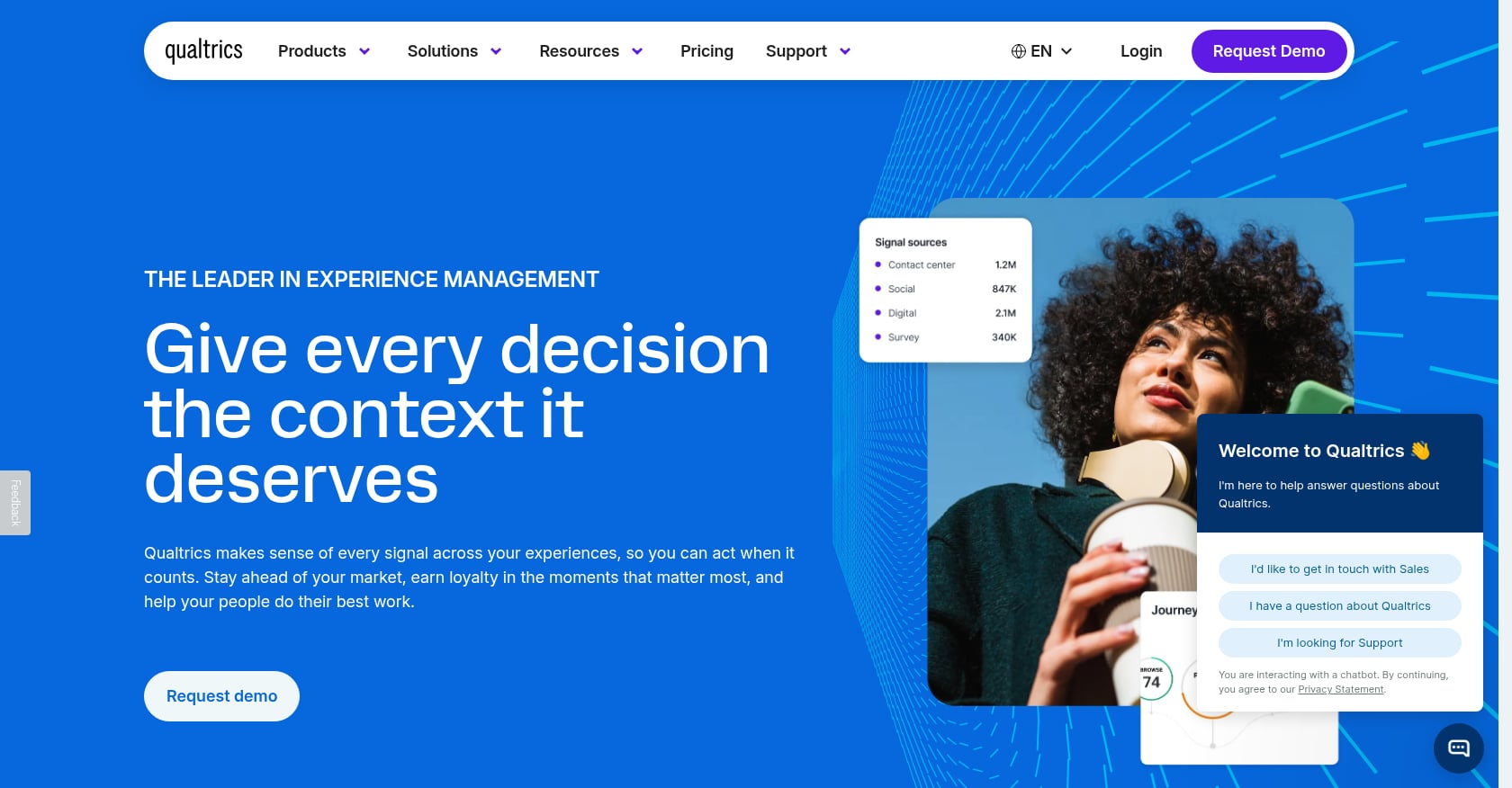
Qualtrics serves enterprise research teams running structured market research, concept testing, pricing research, brand tracking, customer feedback, and large-scale survey programs.
Pricing: Custom/enterprise pricing. Qualtrics does not publish a simple official price list, and buyer-reported costs vary by module, usage, and contract source.
Key features:
- All-in-one platform for building, launching, and analyzing survey research
- Used for market assessment, concept testing, pricing and packaging, product experience, and strategic decision-making
- G2 rating: 4.4/5 from 3,004 reviews source
Tradeoffs:
- Expensive and procurement-heavy
- Steep learning curve for advanced features
- A Reddit thread in r/Marketresearch was critical, with users saying pricing was not transparent and product quality had declined in areas like data mapping, question types, and media testing source
- Can be overkill for PR teams that only need quick message checks or persona inputs
Bottom line: Use Qualtrics when research quality, survey scale, compliance, and advanced analysis justify enterprise complexity.
Honorable Mentions
YouGov Profiles. Good for audience profiling, media planning, brand health, and segmentation. YouGov Profiles analyzes millions of data points to identify audience groups based on values, lifestyle, media habits, and purchase behaviors source. Public G2 review volume is low (6 reviews), so it is included here rather than in the main list.
Google Trends. Free and useful for public interest signals, seasonality, and headline timing. Not a full public relations market research platform, but valuable for quick directional checks before campaign planning.
Reddit and manual community research. Not software, but possibly the highest-signal source for voice-of-customer language, objections, complaint patterns, and niche audience beliefs. The SparkToro Reddit example above proves the point: affinity data is useful, but it does not replace reading what real people say in their own words.
The PR Market Research Stack Framework
Rather than buying every tool on this list, think in layers. Public relations market research works best when each layer builds on the one before it.
Layer 1: Audience Truth
Goal: Define publics, motivations, pain points, segments, and personas.
Tools: MixBright, SparkToro, Audiense, SurveyMonkey, Qualtrics.
Best output: Audience overview, buyer personas, message hypotheses, stakeholder map.
Layer 2: Narrative Truth
Goal: Understand what the market already says, believes, fears, and debates.
Tools: Brandwatch, Talkwalker, Meltwater, Brand24, Reddit/forum research.
Best output: Narrative map, sentiment themes, objections, emerging issues, cultural hooks.
Layer 3: Media Truth
Goal: Identify who shapes the conversation.
Tools: Muck Rack, CisionOne, Prowly, SparkToro.
Best output: Journalist lists, outlet maps, podcast/newsletter targets, pitch angles.
Layer 4: Measurement Truth
Goal: Prove what changed.
Tools: Meltwater, CisionOne, Muck Rack, Brandwatch, Talkwalker, Prowly.
Best output: Share of voice, message pull-through, sentiment shift, branded search lift, behavior change.
Layer 5: Stakeholder-Ready Deliverables
Goal: Make the research usable.
Tools: MixBright for persona/deck outputs, monitoring platforms for dashboards, Prowly/Muck Rack for coverage reports.
Best output: Executive deck, client pitch, campaign plan, persona cards, measurement report.
A PR team does not need every layer on day one. Start with audience truth, add layers as volume, risk, or measurement requirements grow.
Recommended PR Research Stacks by Team Type
Lean Agency or Consultant
- MixBright for audience intelligence and strategy decks
- SparkToro for channel discovery
- Brand24 or Prowly for lightweight monitoring/outreach
- Manual Reddit/review mining for pain-point language
In-House PR Team
- MixBright for persona and strategy alignment
- Muck Rack or Prowly for journalist research and outreach
- Brand24 or Meltwater for ongoing monitoring
- SurveyMonkey for message checks
Enterprise Consumer Brand
- MixBright for persona/strategy alignment across teams
- Brandwatch or Talkwalker for social intelligence
- Meltwater or CisionOne for media intelligence and outreach
- Qualtrics for brand tracking and structured surveys
Product Launch PR
- MixBright for personas and positioning
- SparkToro for audience channels
- Muck Rack or Prowly for media lists
- Brand24 or Meltwater for launch monitoring
Crisis and Reputation Monitoring
- Talkwalker, Brandwatch, Meltwater, or CisionOne for real-time monitoring
- Brand24 for lower-budget alerting
- MixBright for stakeholder/persona understanding and message scenario planning
Common Mistakes When Buying PR Research Tools
1. Buying a media database before defining the audience. If the team cannot explain who the publics are and what they believe, a journalist list only helps them pitch weak stories faster.
2. Treating social listening sentiment as ground truth. Sentiment scores are directional signals, not precise measurements. They require context and manual review.
3. Ignoring pricing add-ons. Broadcast monitoring, social listening, extra seats, historical data, and premium support are often sold separately. Ask about the total cost before signing.
4. Using AI summaries without evidence checks. Over 90% of PR teams have integrated generative AI into workflows source, but AI summaries can miss nuance or hallucinate. Tools with confidence labels and source transparency reduce this risk.
5. Reporting impressions instead of outcomes. The Barcelona Principles are clear: PR measurement should focus on outcomes like attitude, behavior, and reputation shifts, not vanity metrics like circulation or AVEs source. A collective of PR agencies recently partnered with Memo to use readership metrics instead of softer volume-based metrics, as clients increasingly question the actual impact of earned media source.
6. Confusing “dashboard available” with “client-ready deliverable.” Most monitoring dashboards are not designed for executive presentations. If your stakeholders need polished decks and clear narrative, plan for that output format from the start.
7. Assuming one tool handles everything equally well. No single platform does audience research, journalist outreach, real-time monitoring, structured surveys, and executive-ready personas at the same depth. Build a stack, not a Swiss army knife.
Pricing Transparency and Procurement Checklist
PR software pricing is often opaque. Before comparing vendors, ask about:
- Public pricing available?
- Annual contract required?
- Seat limits?
- Mention or search volume limits?
- Keyword or topic limits?
- Broadcast monitoring: included or add-on?
- Social listening: included or add-on?
- Historical data limits?
- Reddit, LinkedIn, TikTok, Meta data access?
- Export formats (Slides, PDF, CSV)?
- Dashboard sharing capabilities?
- AI summaries included or gated?
- Human analyst support included?
- Data methodology documented?
- Can outputs be edited and defended?
Tools with more transparent pricing include SparkToro, Audiense, Prowly, and Brand24. Tools requiring sales conversations include Muck Rack, Meltwater, CisionOne, Brandwatch, Talkwalker, and Qualtrics. For sales-led tools, practitioners on Reddit consistently warn that renewal pricing can increase significantly and should be negotiated source.
Final Recommendation
Public relations market research should start with audience and narrative clarity, not a media database subscription. Buy the tool that matches the research question.
If the goal is strategy, personas that hold up under scrutiny, and stakeholder-ready research, start with MixBright. Add monitoring, outreach, and survey platforms as execution needs and measurement requirements justify the cost.
The teams producing the strongest PR outcomes are not the ones with the most dashboards. They are the ones that understand their publics deeply enough to tell stories that actually land.
Ready to build your audience model first? Book a MixBright demo or explore pricing options.
Frequently Asked Questions
What is public relations market research?
Public relations market research is the process of gathering and analyzing information about audiences, stakeholders, media narratives, public opinion, competitors, and communications outcomes to guide PR strategy. It includes audience segmentation, message testing, media landscape analysis, social listening, reputation monitoring, and outcome measurement. PRSA defines research as the systematic gathering of information to understand a situation, check assumptions about publics and perceptions, and determine PR consequences.
What is the difference between PR research and market research?
Market research typically focuses on customers, demand, product fit, pricing, and buying behavior. PR research focuses on publics, perception, reputation, media narratives, stakeholder trust, and communications outcomes. The two overlap when PR supports brand positioning, product launches, or go-to-market strategy. A team running marketing personas versus buyer personas may need both types of research working together.
What is the best public relations market research tool?
It depends on the research job. MixBright is the best starting point for research-backed personas and PR strategy decks. Muck Rack and Prowly are stronger for media outreach. Meltwater, Brandwatch, and Talkwalker are stronger for ongoing monitoring. SurveyMonkey and Qualtrics are stronger for structured surveys and message testing.
How much do PR market research tools cost?
Transparent tools start free or under a few hundred dollars per month (SparkToro, Brand24, Prowly). Enterprise platforms like Meltwater, CisionOne, Muck Rack, Brandwatch, and Talkwalker use custom annual pricing that can reach five figures depending on modules, seats, source coverage, and add-ons.
Can AI replace public relations market research?
No. AI accelerates research synthesis, persona drafts, summaries, and trend analysis, but it still needs evidence, human judgment, and source transparency. PRSA reported that more than three-quarters of PR professionals use generative AI at work, but among AI avoiders, 56% said AI is overhyped and 41% said AI tools are risky source. Tools with confidence labels and documented methodology reduce hallucination risk.
Should PR teams use Reddit for market research?
Yes, as qualitative signal. Reddit is valuable for pain-point language, objections, complaints, category myths, and niche audience debates. It is not a statistically representative sample, so pair it with survey data, audience tools, interviews, and media monitoring for a complete picture.
What should a PR team buy first?
Start with the research question, not the tool category. If the team lacks audience clarity, start with an audience intelligence and persona tool. If the team knows the audience but needs media contacts, add a journalist database. If the team needs ongoing monitoring, add a listening platform. The most common mistake is buying Layer 3 and 4 tools (outreach, monitoring) before Layer 1 (audience truth) is established.
How do I evaluate PR market research tools with confidence labels?
Look for tools that distinguish between first-party data (provided directly by the brand or team), data-backed insights (drawn from observed data sources), and AI-inferred conclusions (generated by models). MixBright’s methodology and data integrity page documents this approach. Confidence labels help teams and stakeholders understand which insights are well-supported and which need additional validation.